Understanding Telecom Racks and Cabinets
In our ever-connected world, telecom infrastructure quietly operates in the background to keep companies, data centers, and communication networks functioning. At the core of this network are telecom cabinets and racks — the backbone that hosts servers, routers, switches, and power systems.
As we approach 2025, telecom infrastructure is becoming more complex, compact, and performance-focused. Selecting the best cabinets and racks for telecom isn't just a technical issue; it's an important one. In this comprehensive guide, we'll explain everything you need to know about cabinets and telecom racks, including how they function, what to look out for, and what to consider, so that you can select the right one for long-term scalability and reliability.
What Are Telecom Racks and Cabinets?
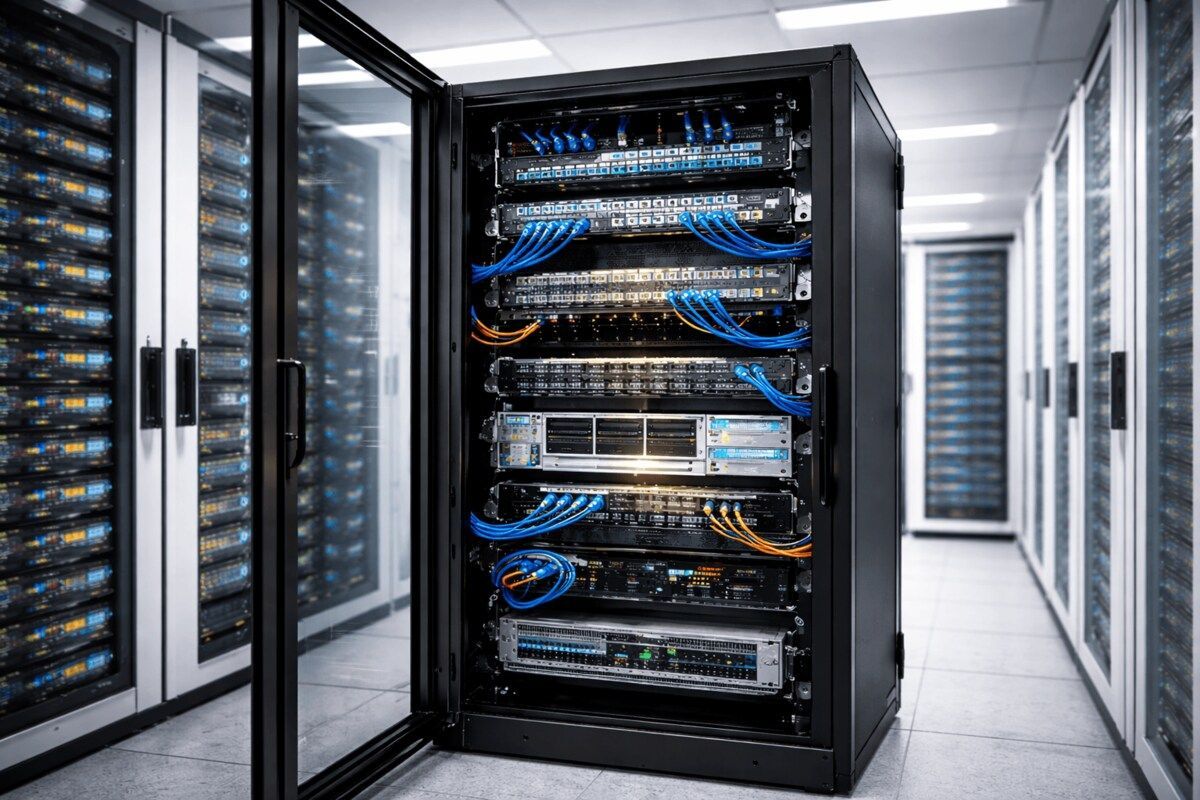
Telecom cabinets and racks are specialized enclosures designed to safely and efficiently house networking and telecommunications equipment. They are designed to provide organized mounting, airflow management, cable organization, and physical protection of critical hardware.
Although the terms are frequently employed interchangeably, there is an important distinction:
- Racks for telecom are open-frame structures, perfect for environments with controlled airflow, where airflow and easy access are essential.
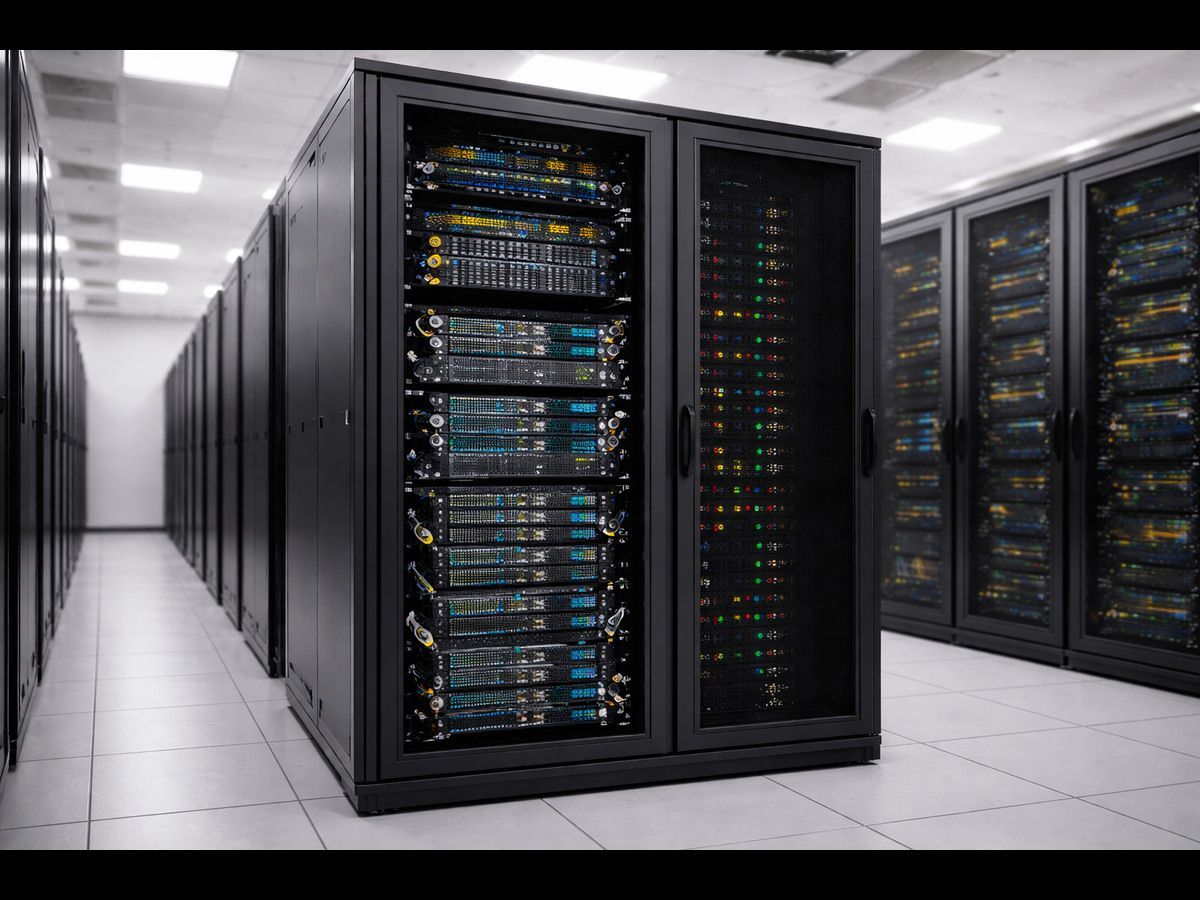
- Cabinets for telecom are closed units that have sides and doors. They offer greater privacy, dust prevention, and noise management.
Both play an essential role in coordinating telecom infrastructure, whether it's a small server rack or a large data center.
Why Telecom Racks and Cabinets Matter in 2025
The need for faster data speeds, 5G networks, edge computing, and cloud services has added pressure to telecom infrastructure. Modern telecom cabinets and racks are not just passive storage units; they actively contribute to system performance.
In 2025 2025, telecom cabinets and racks are crucial as they:
- Increase the life of equipment by ensuring proper ventilation
- Reduce the amount of downtime caused by ensuring systems are organized
- Improve scalability to accommodate future expansions
- Help increase power densities and cable volumes.
- Make sure that you comply with the industry standards.
Without the appropriate enclosure solution, even the most sophisticated telecom equipment may not perform as well.
Key Components of Telecom Racks and Cabinets
Understanding the components will help you make better decisions when choosing telecom cabinets and racks.
1. Frame Structure
The frame controls the load capacity and its stability. The best steel frames are used to support the weight of servers and telecom equipment.
2. Mounting Rails
Flexible mounting rails that can be adjusted to accommodate different equipment sizes and rack units that are standard (U size).
3. Doors and Panels
Perforated doors help airflow while solid doors increase security. Side panels provide protection and help manage airflow.
4. Cooling and Ventilation
The proper airflow is essential in modern telecom cabinets and racks. Many designs include air vents, fans, and hot- and cold-aisles.
5. Cable Management
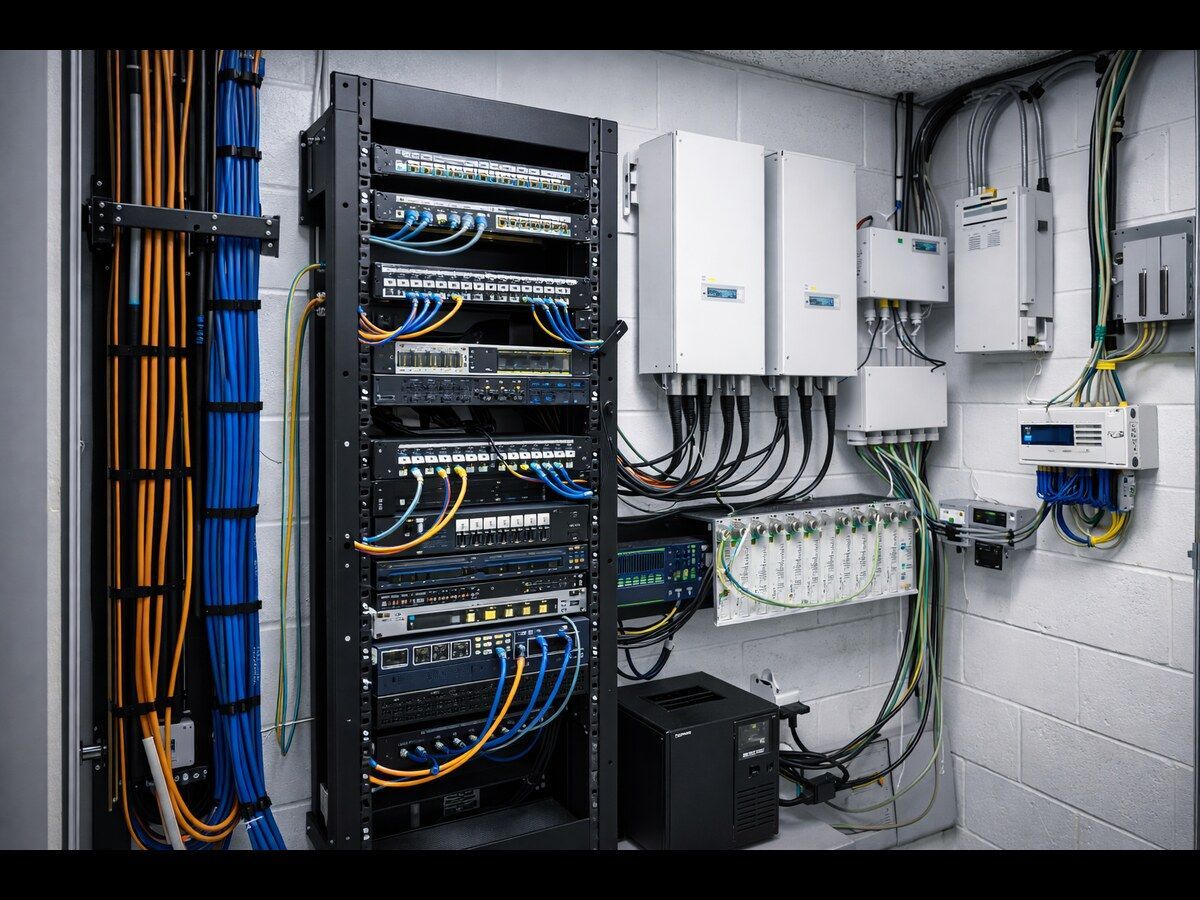
The integrated cable tray, along with vertical organizers and entry points, helps reduce clutter and improve maintenance efficiency.
Types of Telecom Racks and Cabinets
Not all telecom cabinets and racks are created equal. The best type to choose is dependent on your location and the application.
Open Frame Racks
- Ideal for servers and data centers that are in secure rooms
- Excellent airflow and easy access
- Affordable and light
Wall-Mount Cabinets
- Ideal for small offices or edges.
- Space-saving design
- Supports telecom and networking devices. Supports telecom and networking.
Floor-Standing Cabinets
- Great for large installations
- A large load-bearing capacity
- Cooling and security options that are more robust
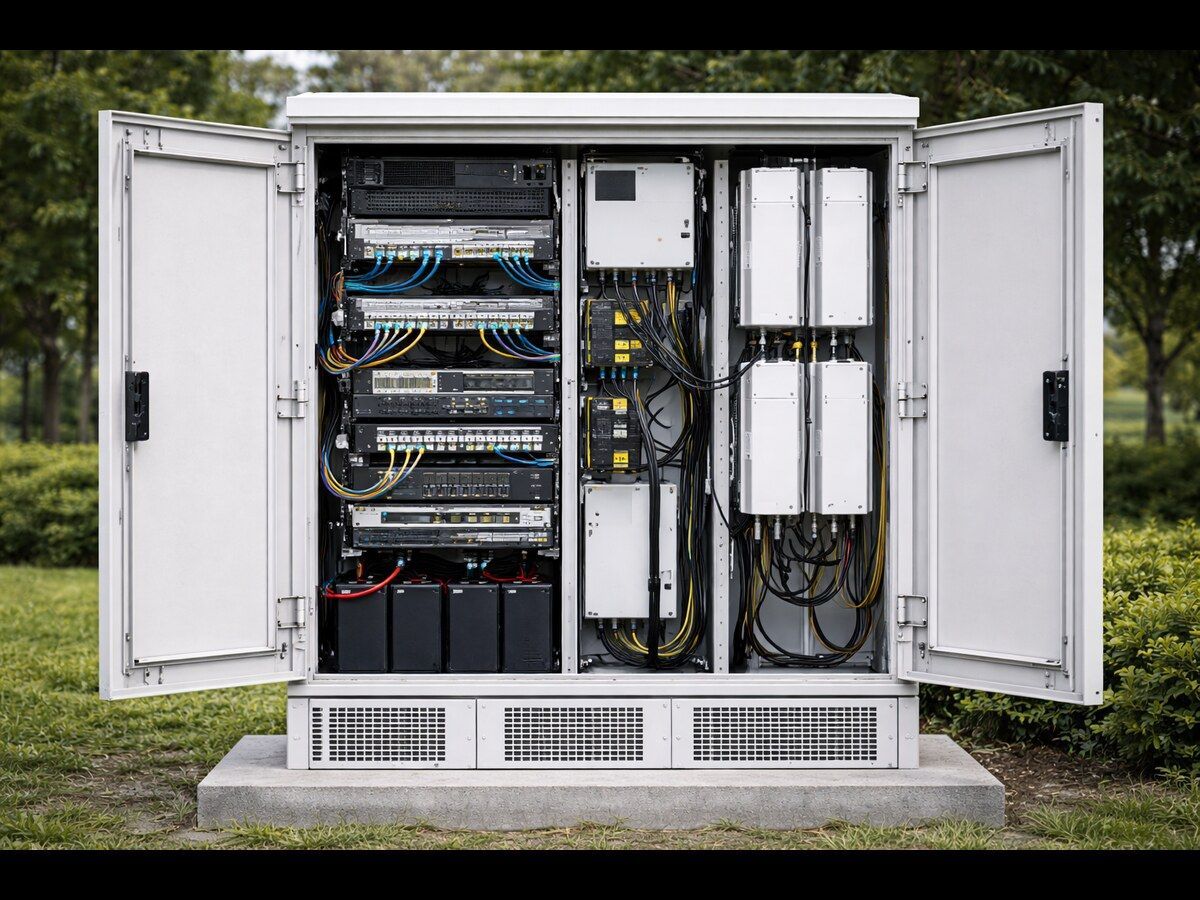
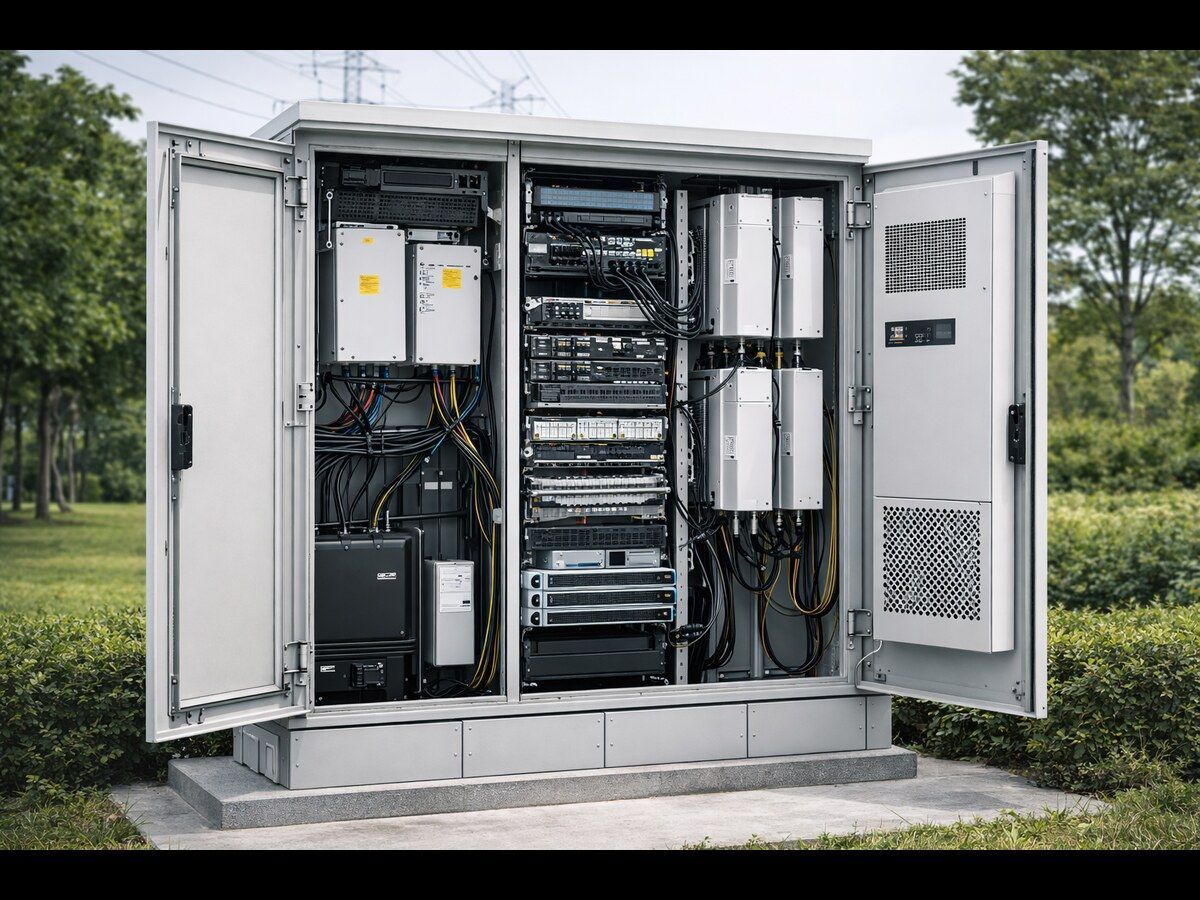
Outdoor Telecom Cabinets
- Dust-proof and weatherproof
- Created to withstand harsh conditions
- They are used in telecom towers and remote areas
How to Choose the Right Telecom Racks and Cabinets
The choice of cabinets and racks for telecom must meet today's needs and support future expansion.
Consider Equipment Size and Load
Check that the rack or cabinet can withstand the weight and depth of the telecom device without compromising the equipment's stability.
Focus on Cooling Requirements
High-density equipment creates heat. Select telecom racks and cabinets that are designed to maximize heat transfer and airflow.
Think About Security
If your machine is located in an open or shared environment, Cabinets with lock mechanisms are crucial.
Plan for Scalability
The network's future expansion is inevitable. Modular telecom cabinets and racks enable simple upgrades without replacing the entire system.
Common Mistakes to Avoid
Many companies ignore small things that later turn into costly issues. Avoid these common blunders:
- Avoiding cabinets with inadequate ventilation
- Ignoring cable management needs
- Underestimating future equipment growth
- Selecting materials of poor quality to reduce short-term costs
The best-designed telecom racks and cabinets prevent these problems from the start.
Why Quality Matters More Than Ever
In 2025, telecom systems will be expected to run continuously for long periods without interruption. Cabinets and racks for telecom that are not up to par could cause excessive heat, inadequate cable management, and frequent maintenance issues.
This is why businesses rely on trusted companies like Iceberg Cabinet, known for their robust, high-quality, precision-engineered telecom cabinets and racks designed to meet the modern demands of infrastructure. By investing in high-quality enclosures, you can ensure long-term reliability, safety, and security.
The Future of Telecom Racks and Cabinets
As technology improves, telecom cabinets and racks are becoming more intelligent and adaptable. Future trends include:
- Higher rack densities
- Improved airflow design
- Integration of monitoring systems with monitoring
- Energy-efficient and sustainable materials
To stay ahead, you must choose solutions that are designed for the future, not just the present.
Frequently Asked Questions (FAQs)
1. What is the most common dimension for telecom cabinets and racks?
The majority of telecom cabinets and racks are built to a standard 19-inch length, with heights expressed in unit racks (U). Most sizes range from 12U to 42U, based on the application.
2. Are telecom cabinets and racks appropriate for servers?
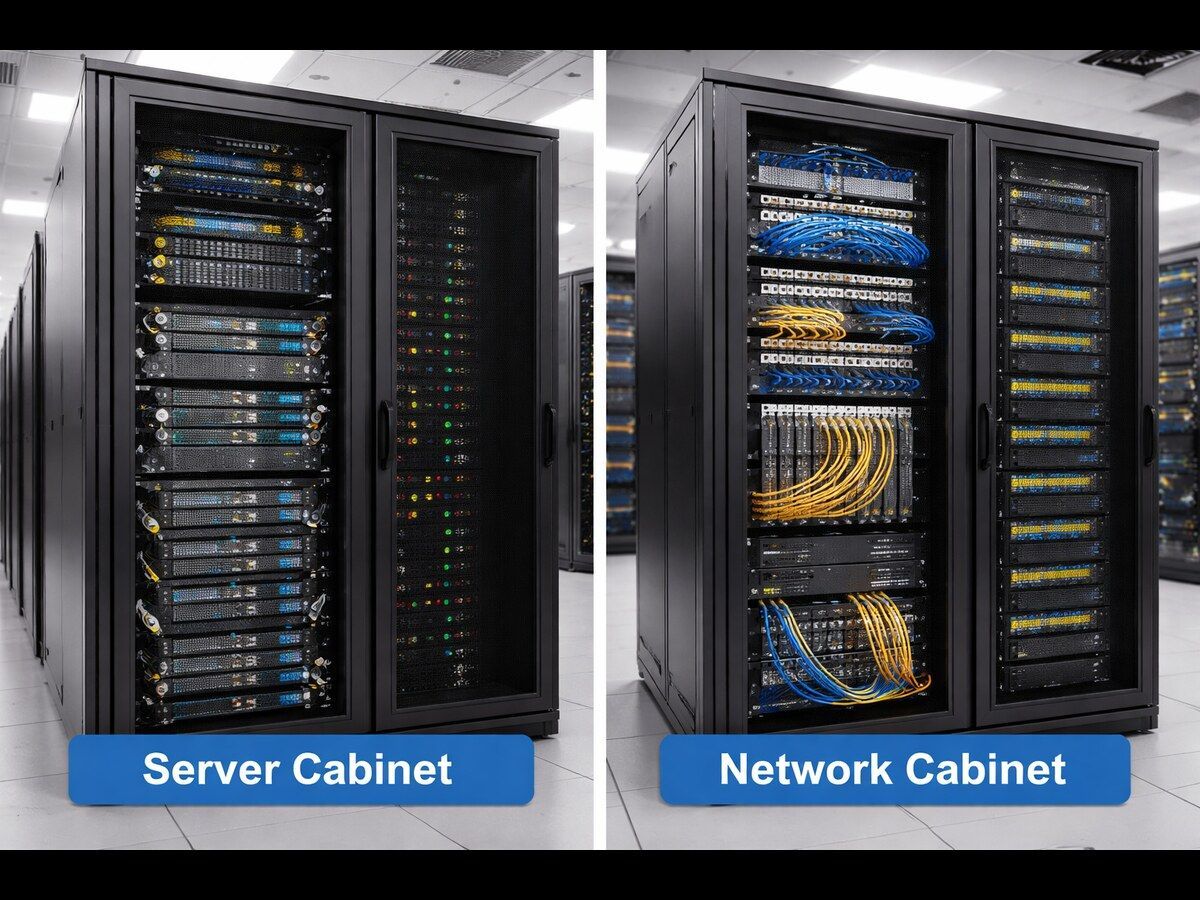
Yes, many cabinets and racks are designed to accommodate both server and networking equipment, provided the load capacity and ventilation requirements are met.
3. How do I handle the temperature in my telecom cabinet?
Proper airflow, perforated doors, cooling fans, and smart cables help efficiently manage heat in cabinets and telecom racks.
4. What is the difference between outdoor and indoor telecom cabinets?
The indoor cabinets focus on accessibility and airflow, while outdoor cabinets are weatherproof and dust-proof, built to withstand extreme environmental conditions.
5. Why should I invest in top-quality telecom cabinets and racks?
High-quality cabinets and racks for telecoms can reduce downtime, secure expensive equipment, improve equipment organization, and support future expansion, making them a cost-effective long-term investment.
Final Thoughts
Understanding telecom racks and cabinets is vital to creating an efficient, scalable, and future-proof telecom infrastructure in 2025. From security and airflow to scalability and endurance, making the right decision will significantly impact your system's performance.
When you partner with a reputable service such as Iceberg Cabinet, you can ensure your cabinets and telecom racks are designed to meet today's demands and prepare for future growth.