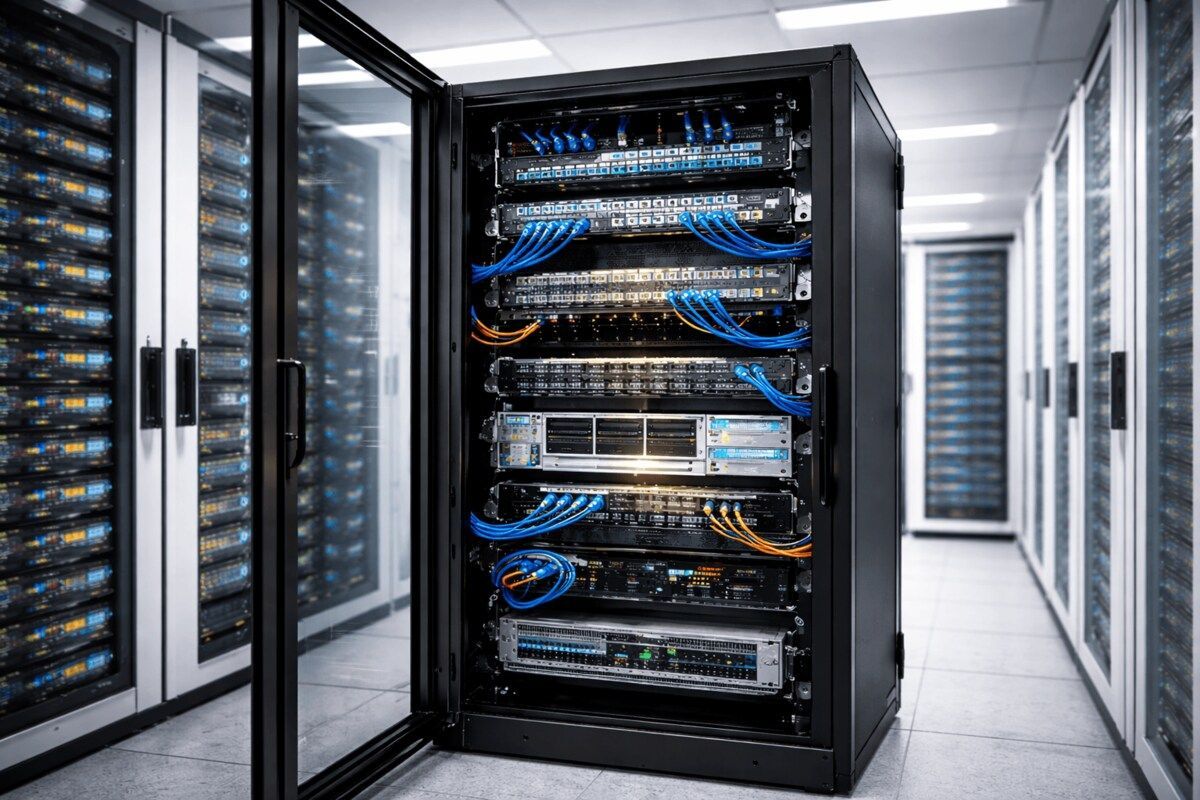
What Is the Difference Between a Server Cabinet and a Network Cabinet?
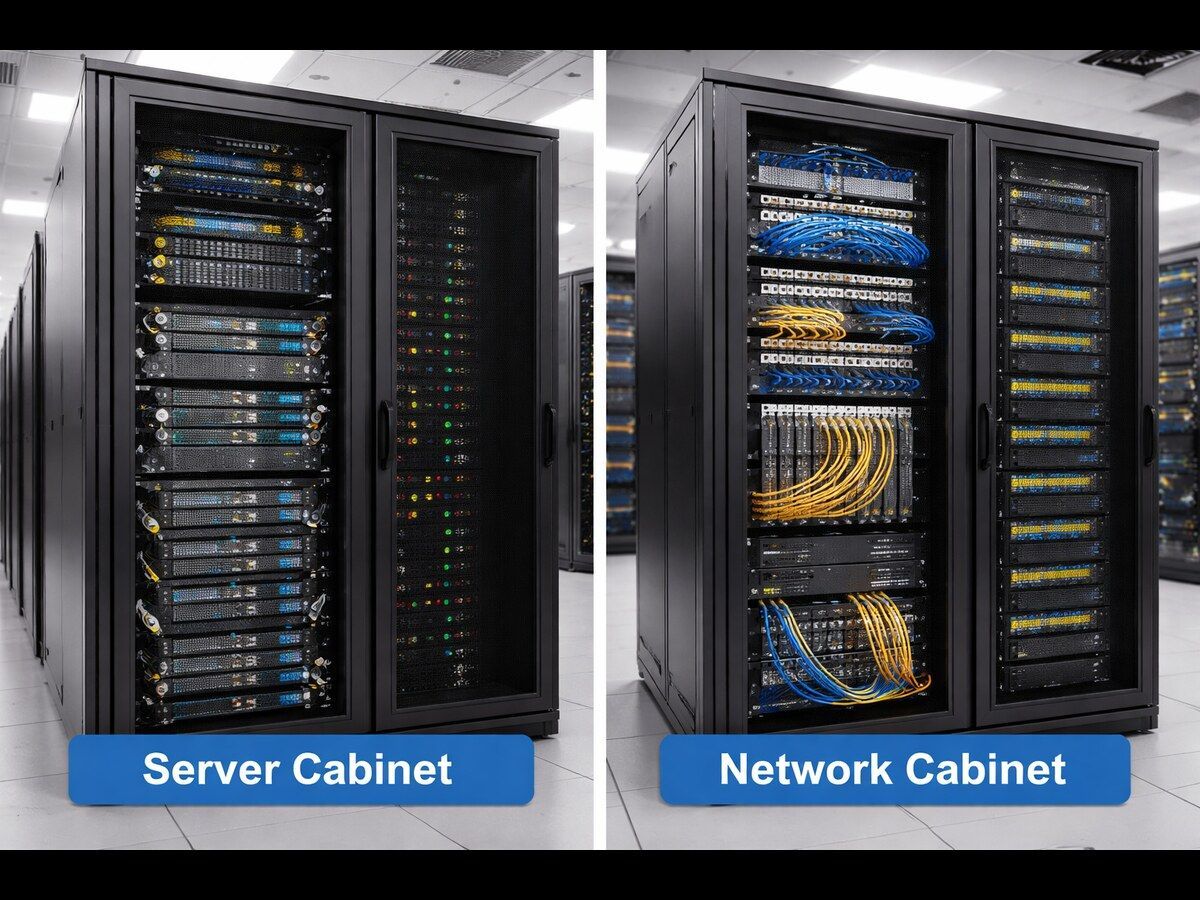
As businesses are becoming more dependent on computers, picking the best infrastructure to provide support for IT devices isn't a technological thought-out decision; it's now a strategic choice. One of the most frequent questions management of IT, entrepreneurs and facility planners are asking is: what's the difference between server cabinets and network cabinets?
On first inspection, the two cabinets might appear similar. They're made of metal, they contain equipment, and are typically found in storage rooms for data or telecommunications. However, in actuality, server cabinetry and network cabinets have been made for various purposes as well as loads and environments. Understanding the distinction can assist you in avoiding issues with performance, overheating and expensive upgrade costs later on.
This guide will explain the distinction between server cabinets and network cabinets in plain, concrete terms so that you can make the best choice for your setup.
Understanding the Role of IT Cabinets in Modern Networks
Before comparing them prior to comparing them, it is important to know why cabinets are essential in the first place. Cabinets safeguard important IT equipment, increase the airflow, arrange cabling and increase security. If you're running the office of a small or large company, the right cabinet will ensure reliability and flexibility.
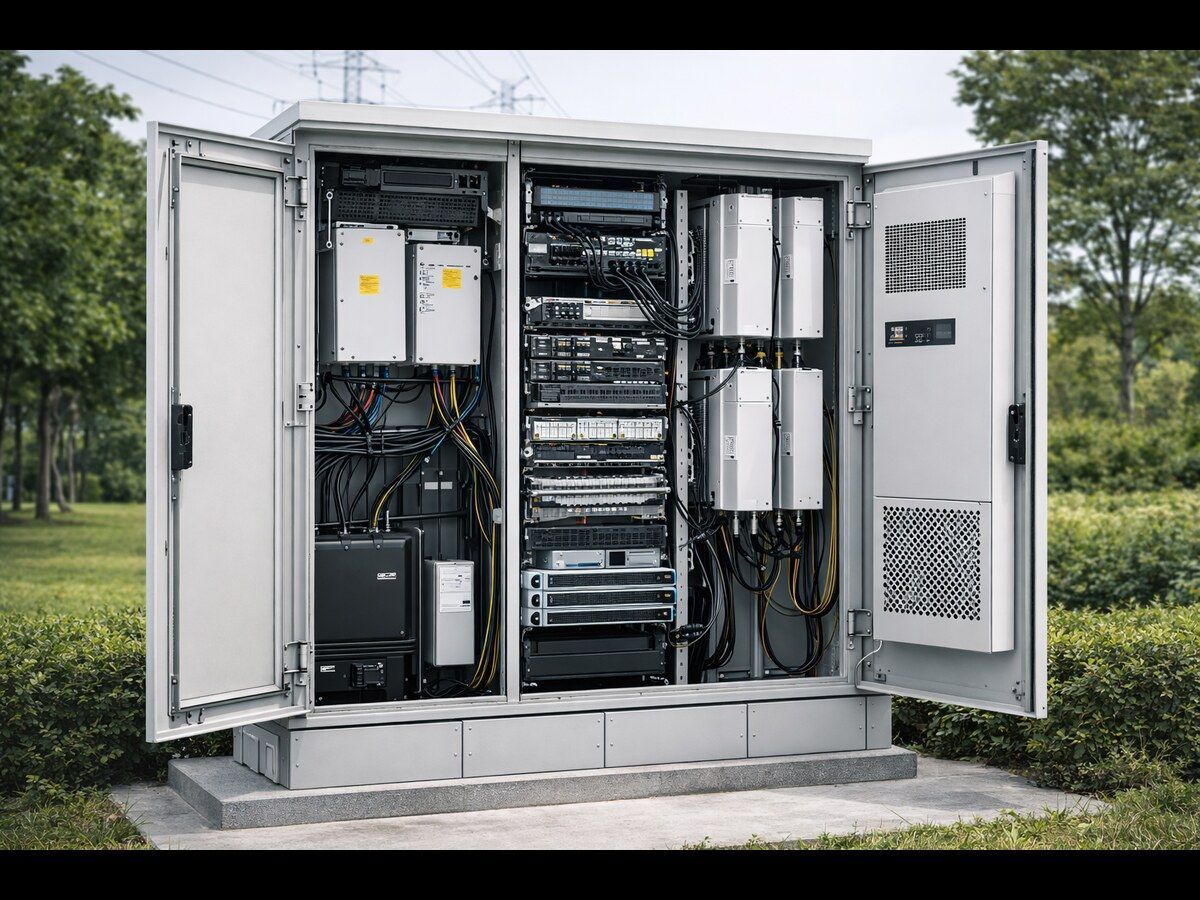
The Iceberg Cabinet Iceberg Cabinet, telecommunication cabinets and server rack cabinets are made to accommodate the latest needs in networking while ensuring that installations are clean and secure. They are also future-ready.
What Is a Server Cabinet?
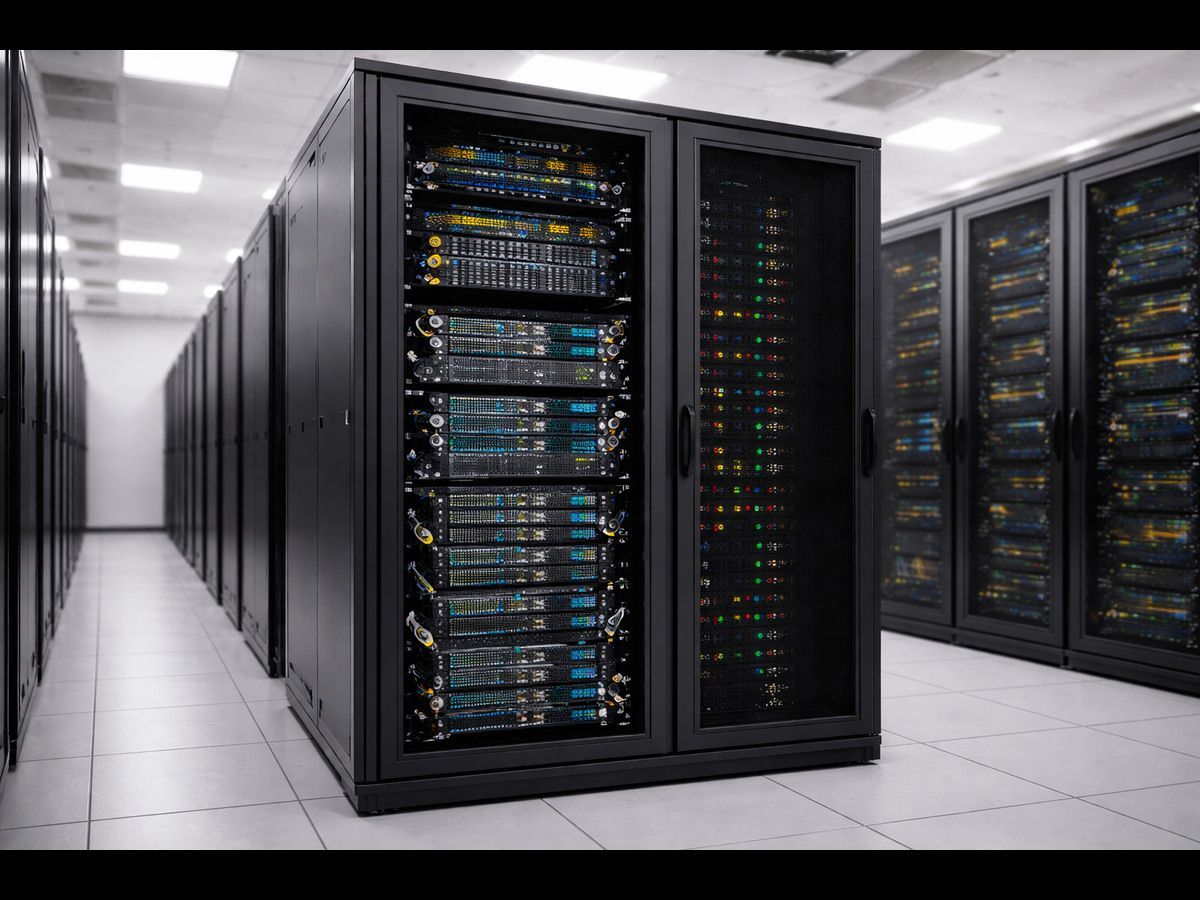
Server cabinets are sturdy enclosures that are specifically designed to house servers and other equipment. Servers are incredibly powerful machines that handle data, run programs and also store important information for business. Due to their purpose, they create substantial energy and weight.
Key Features of a Server Cabinet
- High capacity for load to support heavy servers
- Increased ventilation or compatibility cabinet air conditioning
- Design of deep cabinets to house servers with full depth
- Security features that are strong, such as locking doors and panels
- Advanced cable management system for data and power cables
Server cabinets are often utilized within data centres, corporate IT rooms and cloud infrastructure facilities as well as other environments where speed and reliability are essential.
What Is a Network Cabinet?
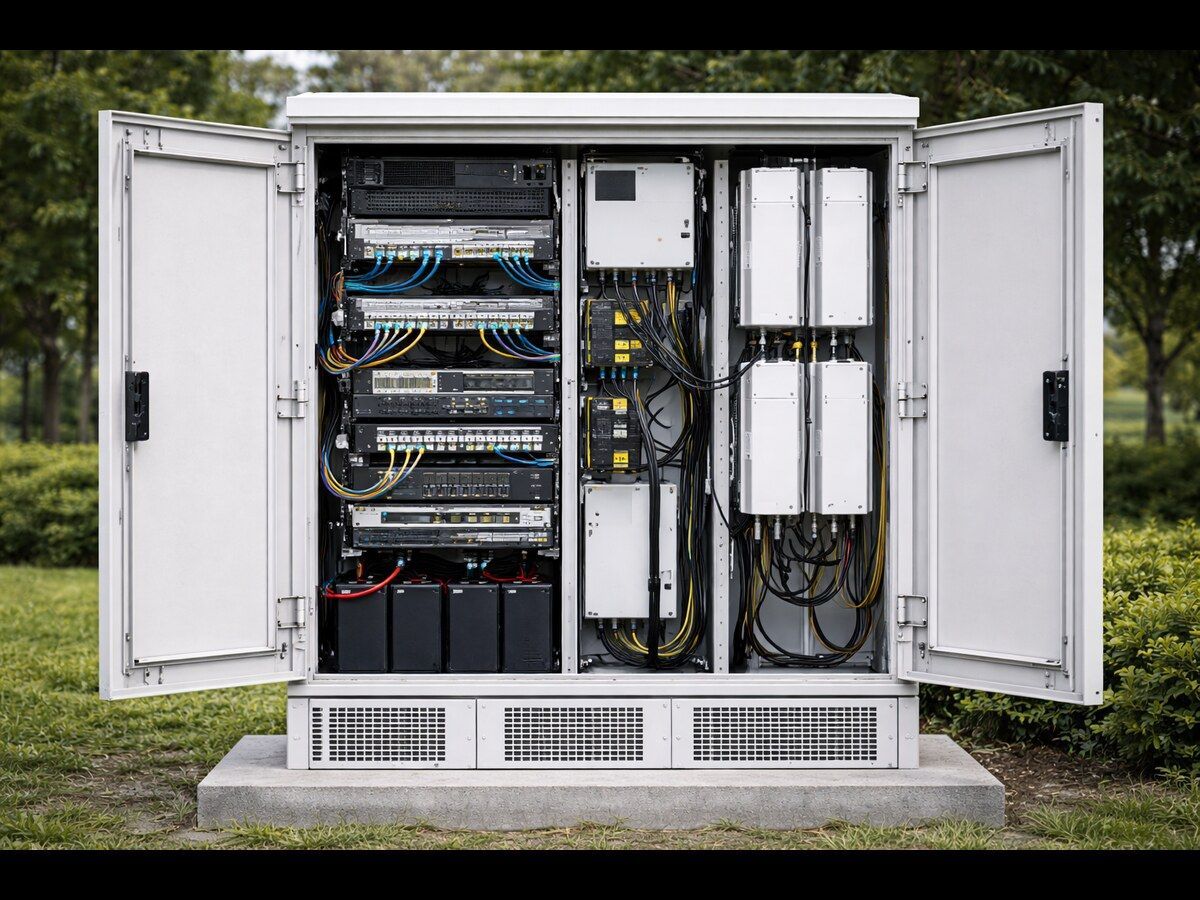
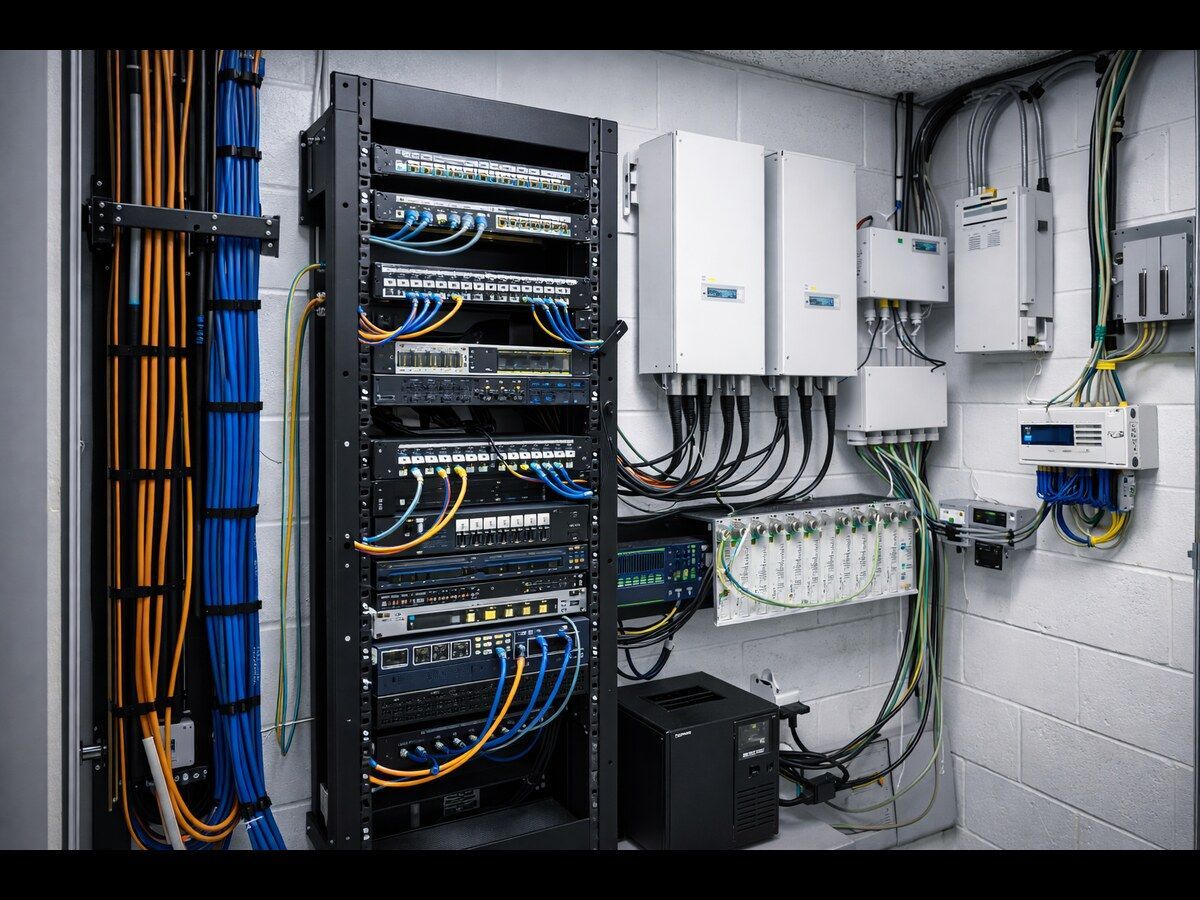
Network cabinets are built to house networking devices rather than the hardware that requires computation. This includes routers, switches and patch panels as well as firewalls and other communication devices that control the flow of data.
Key Features of a Network Cabinet
- The capacity of the load is lighter compared to server cabinets
- Small depth, perfect for floor-standing or wall-mounting configurations
- Improved cable routing for structured cabling systems
- Ventilated panels to passively cool
- Cost-effective design of access layer networking
Network cabinets are frequently utilized in schools, offices and hospitals, as well as retail spaces as well as telecommunication closets where distribution is the main objective, not processing.
Server Cabinet vs Network Cabinet: Core Differences Explained
Let's look at the differences between the server cabinet and network cabinet, focusing on key aspects that are crucial in real-world usage.
1. Purpose and Function
The primary distinction between server cabinets and network cabinets is in the contents they are built to hold.
- A server cabinet is a storage device for servers that manage storage, computing, as well as applications.
- A network cabinet is a device that switches, routes, and transmits information.
2. Load Capacity
Servers are hefty. Because of this:
- Server cabinets are constructed with reinforced frames that can withstand greater weight.
- Network cabinets are less heavy and are designed to handle less demanding loads.
3. Depth and Size
Server cabinets are typically larger to hold servers of full size Network cabinets tend to be smaller and smaller.
4. Cooling Requirements
Since servers produce more heat:
- Server cabinets typically need active cooling systems.
- Network cabinets typically rely upon passive ventilation.
5. Cost Considerations
Network cabinets are typically less expensive, whereas servers cost more due to the strength of their frames, stronger materials and cooling capabilities.
When Should You Choose a Server Cabinet?
Server cabinets are a good choice if you:
- Your physical server, or storage systems.
- You are responsible for high-performance tasks
- Management of heat is a key issue
- You can anticipate future growth in the computing requirements
Organizations that require a lot of data shouldn't compromise their operations the security of their network cabinets by using them instead of the server cabinet.
When Is a Network Cabinet the Better Option?
A network cabinet is logical when:
- It is enough to house routers, switches, and patch panels
- Space is very limited
- You are looking for a low-cost networking solution
- The heat output of the equipment is not sufficient.
Network cabinets are perfect for structured cabling environments as well as telecommunications closets.
Can You Use Both Together?
Absolutely. Indeed, many modern IT environments employ server cabinets as well as network cabinets within the same location. Server cabinets manage storage and processing, while network cabinets handle the distribution of data across departments or floors.
This approach is a hybrid one that helps improve organization, scalability and efficiency in troubleshooting.
Why Cabinet Quality Matters
Whatever cabinet you select, it is important to choose a cabinet that is of high quality. Cabinets that are poorly constructed can cause airflow issues, cables being damaged, airflow issues, and security threats.
Iceberg Cabinet designs telecommunication cabinets and server rack cabinets that include:
- Durable construction
- Afficient airflow
- Smart cable management
- Professional aesthetics
- Long-term stability
Making the right choice at the beginning will save time, money, and stress.
Also, check What is a telecommunication closet?
FAQs: Server Cabinet vs Network Cabinet
1. What is the most significant difference between server cabinets and network cabinets?
The most significant difference is the purpose. Server cabinets house servers and other IT equipment, whereas network cabinets are used to house routers, switches as well as cabling systems.
2. Can a cabinet in a network be used to store servers?
Most of the time, there is no. Network cabinets aren't built to withstand any weight or the cooling demands of servers.
3. Do server cabinets need to be cooled?
Yes. Server cabinets usually need active cooling, or air conditioning, because of the heat created by servers.
4. Are servers more costly in comparison to network cabinetry?
Yes, servers tend to be costlier because they're designed for higher loads, larger equipment and more airflow.
5. Which cabinet is ideal for small offices?
In a small office that has basic equipment for networking, a cabinet will usually suffice. If servers are needed, it is suggested.
Final Thoughts
Knowing the distinction between server cabinets and network cabinets will help you design an efficient, robust IT infrastructure. Although they might appear similar, their designs, design, and capabilities are completely different.
The right cabinet can provide greater airflow, better security, less maintenance and a long-term capacity. It doesn't matter if you need a strong rack for servers or an efficient telecom cabinet; choosing the best option is a good investment for the future of your network.
If you are a business looking for reliable cabinets that are well-engineered, Iceberg Cabinet offers the expertise and product selection to meet the demands of the latest IT environment with confidence.